The menopause and hair loss – what can you do if your hair starts to thin?
In this article, we’ll explore why the menopause affects your hair, what types of hair loss can occur at this time, what you can do in your day-to-day life, and how the Denza More & Better Hair protocol fits into the picture.
What happens to your body during the menopause?
Oestrogen not only plays a role in the menstrual cycle, but also supports the health of the skin and mucous membranes, and affects blood circulation and the functioning of hair follicles.
As oestrogen levels fall, the balance may shift towards male-type hormones, known as androgens, which makes hair follicles more susceptible to hair loss, particularly if there is a genetic predisposition.
During the menopause, however, the duration of the active growth phase may be reduced, more hair shafts may enter the resting phase at the same time, and the hair follicles may shrink, resulting in the production of finer hair shafts.
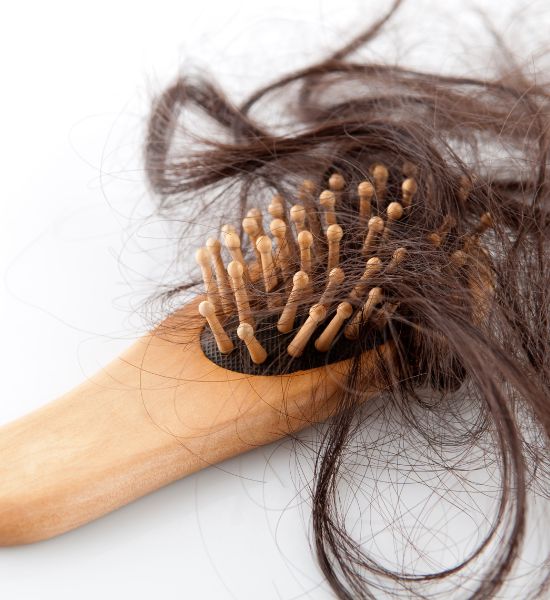
As a result, there will be fewer and finer hairs on the scalp overall; increased hair loss may be experienced; and characteristic thinning becomes visible along the parting and on the crown.
This is not just an aesthetic issue, but also a psychological one: hair loss associated with the menopause can lead to a loss of self-confidence, anxiety and a general feeling of unease.
What type of hair loss is typical during the menopause?
1. Male-pattern genetic hair loss
This is the result of a combination of genetic predisposition and hormonal changes.
2. Telogen effluvium – diffuse, temporary hair loss
This type of hair loss is often temporary, but it can be very alarming and, if left untreated, can significantly thin out the hair on the head.
In such cases, it is not advisable to experiment, as hair loss can lead to significant thinning in the long term. In this situation, a trichological or dermatological examination is recommended, and laboratory tests, as well as hair and scalp assessment, may also be necessary.
As part of the Denza protocol, AI-supported hair and scalp assessment and a medically-based assessment help to determine whether the hair loss is caused by the menopause, genetics, nutritional deficiencies, stress, or a combination of factors.
What can you do on a day-to-day basis to tackle hair loss associated with the menopause?
- Hairstyles and visual tricks: layered, volume-boosting hairstyles; subtle highlights to create the illusion of fuller hair; avoid tightly pulled-back, restrictive styles (buns, tight ponytails)
- Thickening and volumising products: volumising shampoo, conditioner or mousse
- Therapies and specialised treatments targeting hair follicles: these act directly on the hair follicles, aiming to stimulate hair growth and strengthen the hair strands
- Denza More & Better Hair protocol: stimulates hair follicles at a cellular level, improves blood circulation in the scalp, supports the growth phase of hair strands, and is also suitable for treating hormonally-induced hair loss
Internal support also plays a key role in the Denza hair care protocol.
Denza Hair Tablet is a complex formula which:
- Contains L-cysteine – one of the most important building blocks of keratin, the main structural protein in hair
- High-dose biotin – which supports keratin production and the thickness and resilience of hair strands
- Vitamin D3 – a key regulator of the hair growth cycle, which helps reduce hair loss and supports the maintenance of hair density
Lifestyle, hormones and hair loss associated with the menopause
Regular, moderate exercise has a significant impact on the condition of your hair at this time, as it improves blood circulation and reduces stress. In addition, a balanced diet, adequate protein and micronutrient intake, and stress management are also key.
These factors indirectly influence the condition of your hair, but it is also important to support your hair’s health with targeted treatments, such as the Denza protocol.
That is precisely why Denza More & Better Hair does not focus on a single product or treatment, but rather on: a thorough examination of the hair and scalp, supported where necessary by laboratory diagnostics and medical assessment*, state-of-the-art laser hair treatment that stimulates hair follicles at a cellular level, targeted hair vitamin supplements and home care recommendations, and a personalised, long-term treatment plan.
The Denza hair treatment protocol is an effective, comprehensive therapy that focuses on the true causes of hair loss: even in cases of hormonally induced hair thinning linked to the menopause, it works at the level of the hair follicles to help restore your hair’s natural density and quality.
If you feel that the menopause has taken its toll not only on your general well-being but also on your hair, book a free consultation and receive a personalised treatment plan!
The results of our Denza More & Better Hair treatment


“After the menopause, my hair changed completely: it started to fall out, the strands became much thinner, and my hair as a whole began to thin out and weaken, which was most noticeable at my parting. As I’d already had a number of cosmetic treatments that I was happy with, I had confidence in Denza’s effectiveness. And I was right: thanks to Denza, my hair loss stopped completely, I grew lots of new, strong strands of hair, and by the end of the course of treatment my hair had become significantly thicker. All this without any discomfort.”


“The menopause hasn’t been kind to my hair: as soon as I entered the menopause, my hair started to thin and become brittle. As I’ve neared the end of the menopause, my hair has become thinner and my hair volume has decreased significantly. I also suffer from a thyroid condition, which has had a negative impact on the condition of my hair. I’m so glad I discovered Denza, as thanks to the treatment I no longer have to hide myself away; I can finally feel confident again, having regained the fullness and strength of my hair.”


