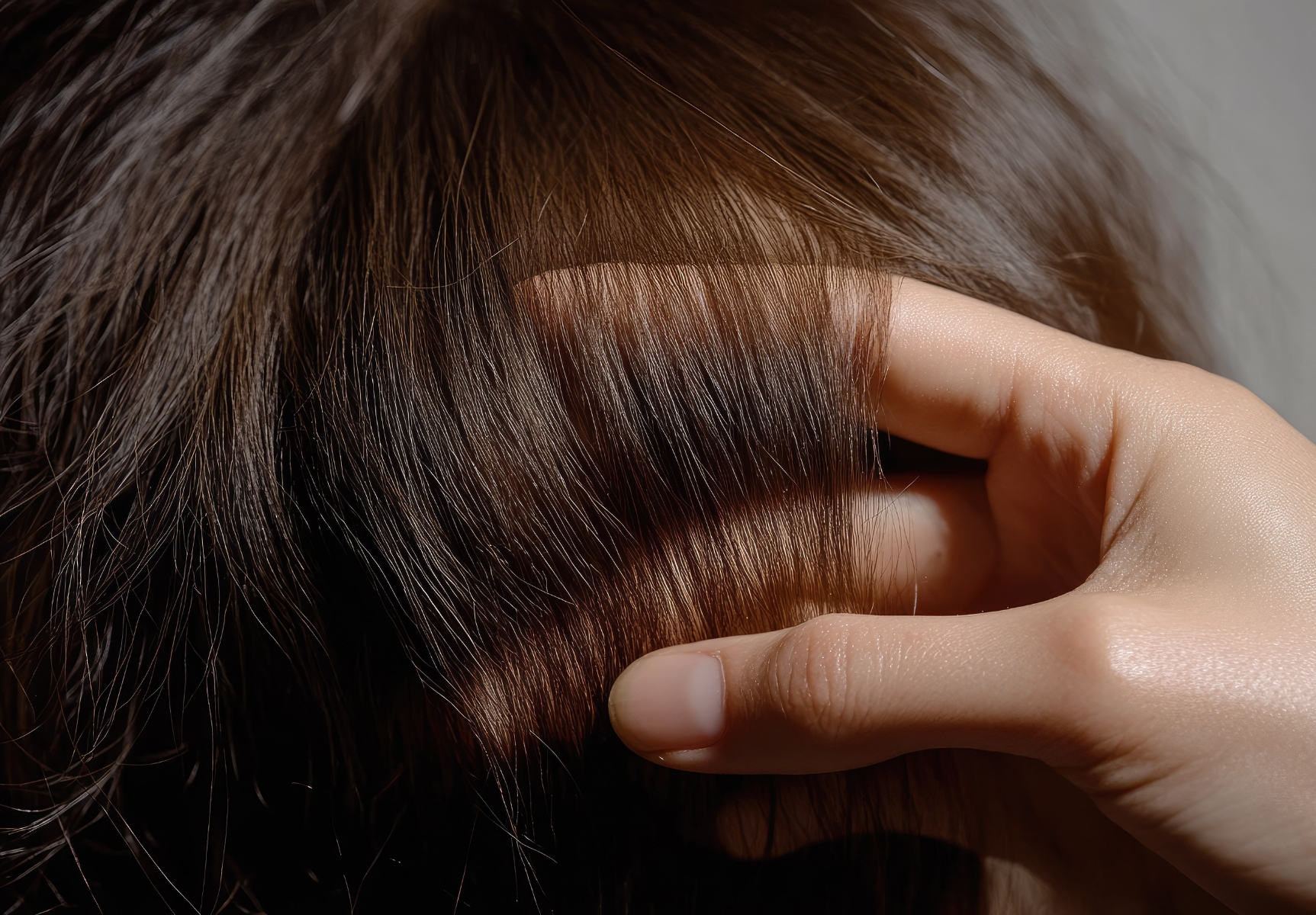
There can be numerous underlying causes of thin hair and baldness in women – which is why it is worth looking beyond the symptom itself to identify the specific trigger amongst the various causes of hair loss. The most common causes of hair loss include hormonal changes (such as during the menopause or the postnatal period), prolonged stress, and certain medications. It is also particularly important to check thyroid function and screen for deficiencies (such as vitamin and other deficiencies), as these can also cause increased hair loss and hair strand thinning. In some cases, an autoimmune condition may underlie the problem – for example, alopecia areata, or patchy hair loss. In such cases, assessing the condition of the scalp and hair follicles, and identifying any associated conditions, is the first step towards appropriate treatment.
It is important to note, however, that one of the most common causes of hair loss in women is so-called androgenetic alopecia, also known as hormonal hair loss or female-pattern hair loss. This condition is primarily attributable to hormonal and genetic factors. Although male baldness is generally perceived as a condition that mainly affects men, it affects nearly 40% of women at some stage in their lives. The difference, however, lies in the pattern of hair loss: whilst men typically experience male hair loss at the forehead and crown, women experience hair loss affecting the entire scalp. The hair becomes increasingly sparse and fine, particularly on the crown and along the parting, whilst a reduction in hair volume is also noticeable.