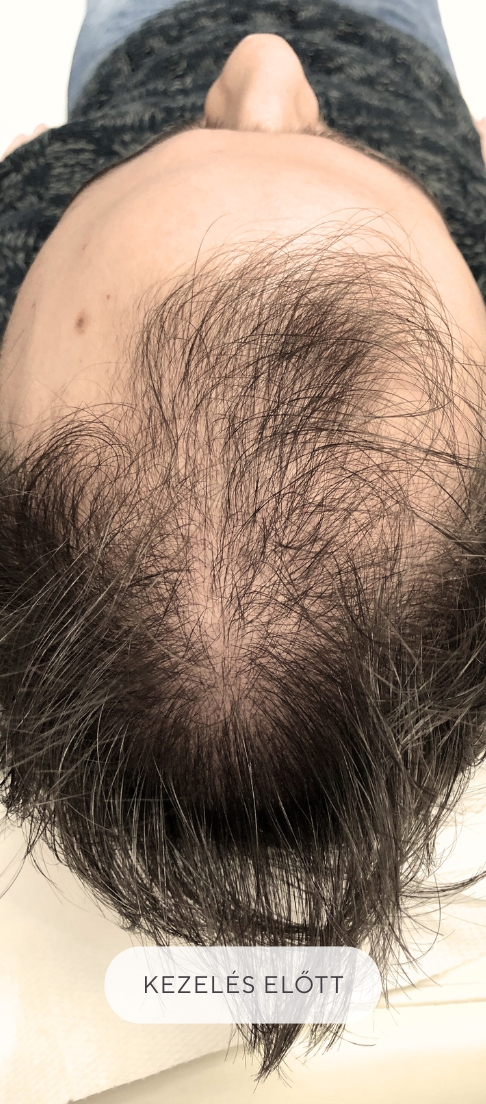
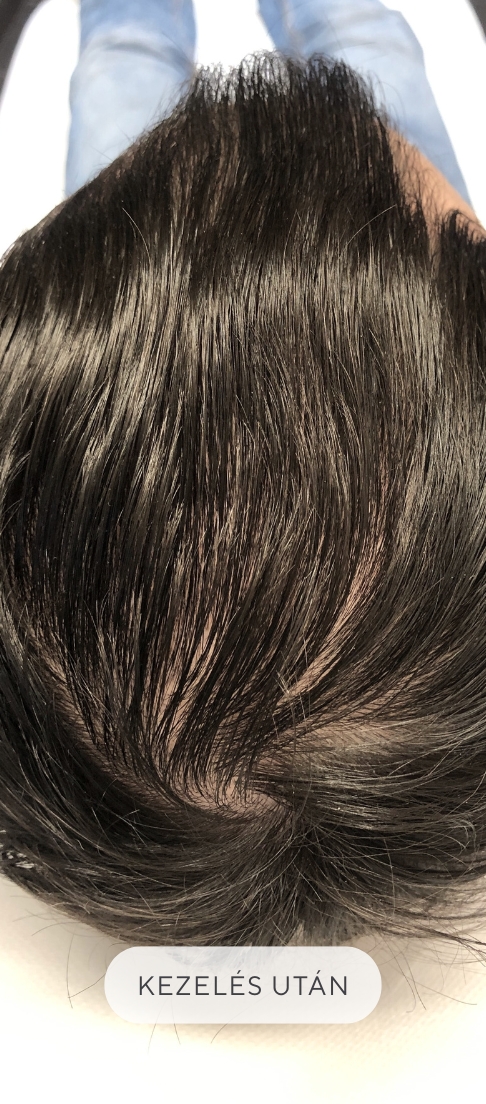
In cases of patchy hair loss, autoimmune processes cause the immune system to attack and destroy the hair follicles, thereby preventing hair growth.
This attack can cause the hair follicles to shrink, or undergo miniaturisation, as a result of which the hair follicles prematurely enter the resting (telogen) phase, leading to hair loss. As a result of this process, bald patches appear on the scalp. Furthermore, the weakened hair shafts are unable to utilise the sebum produced by the sebaceous glands properly; this sebum then accumulates and can block the hair follicles’ exit openings, further preventing new, weak hair shafts from reaching the surface.
Another characteristic symptom of patchy hair loss is that regrowing hair is often unpigmented, white or very light in colour. The cause of this also lies in the autoimmune process: the immune system may attack not only the cells responsible for hair growth, but also the melanocytes responsible for hair colour, meaning they are unable to produce sufficient pigment for the newly growing hairs.